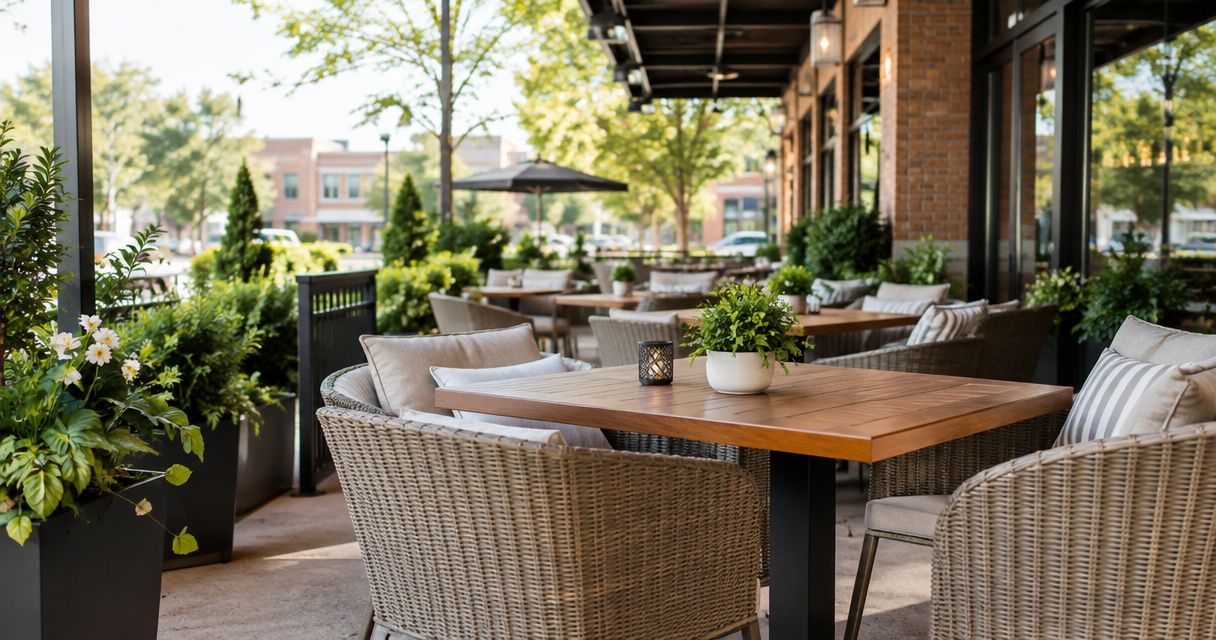
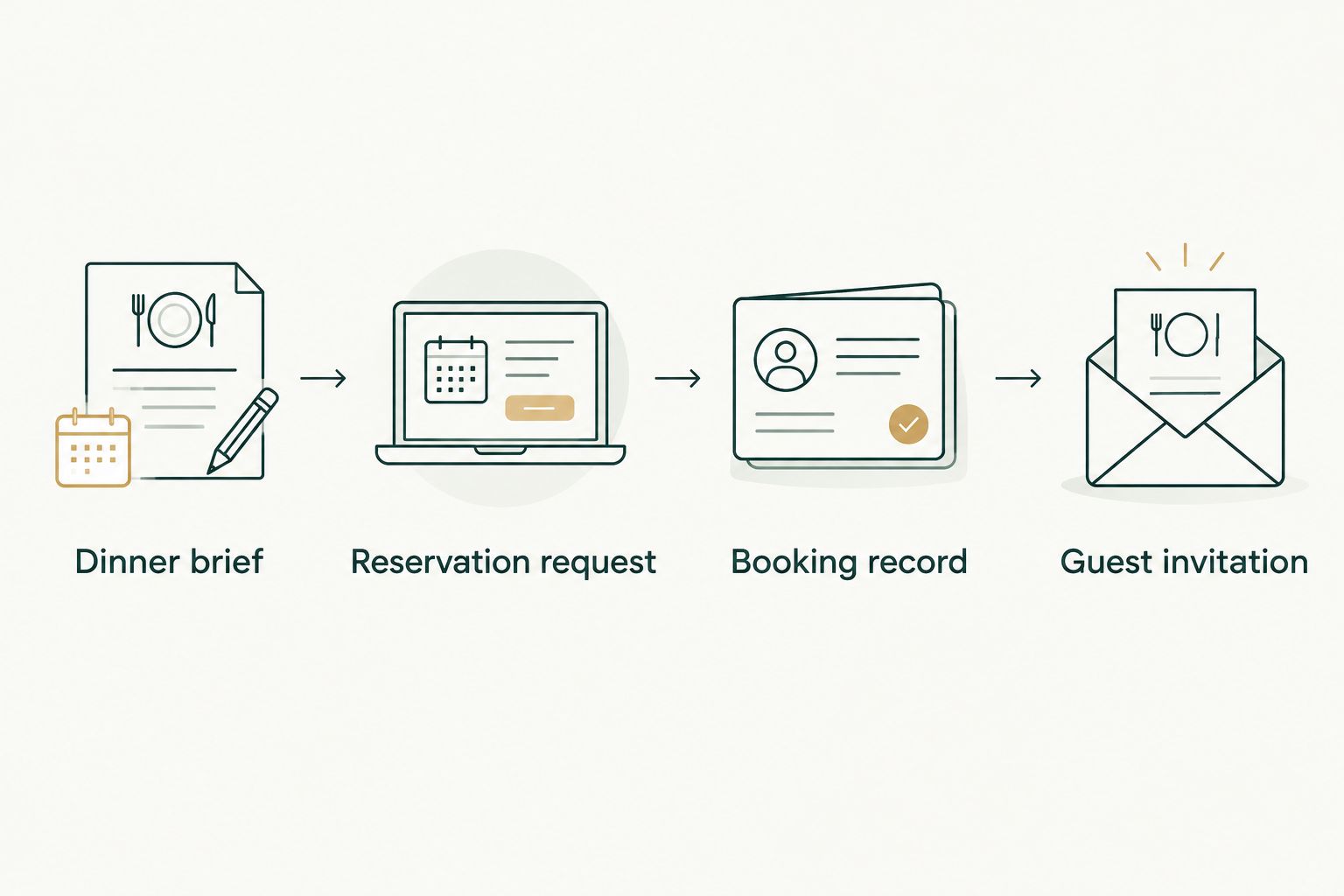
Instead of chasing guest counts and forwarding scattered messages, book your corporate dinner at Siena through the website’s reservation path and keep the details in one shared planning note. This 2026 workflow takes you from an agreed brief to a confirmed dinner, with a separate inquiry route when your celebration needs private dining.
- For corporate dinner reservation siena alpharetta planning, start with the restaurant website and confirm the booking before inviting guests.
- Siena suits hosts seeking Mediterranean and Italian dining for a team dinner or company celebration.
- Keep table reservations and private dining requests separate; an inquiry is not a confirmed booking.
- Use one organizer and one written summary to keep guest counts, dietary requests, and arrival details aligned.
WHY THIS MATTERS
A corporate dinner brings two plans together: the restaurant booking and the guest invitation. When those plans disagree, the host inherits the confusion. Settle the essential details before sending the calendar invitation.
Siena is best for hosts seeking Mediterranean and Italian dining for a company celebration in Downtown Alpharetta. Treat the occasion as dinner first: time together around the table, with the business details settled beforehand.
Start at the Siena website and follow its current reservation link. Use the current first-party information for menus and hours rather than carrying details over from an older invitation or saved screenshot.
BEFORE YOU START
- Prepare the brief. Record the occasion, expected guest count, preferred dinner date, acceptable alternatives, and any dining requirements guests have already shared. Choose 1 organizer to handle restaurant communication.
- Have your booking materials ready. Keep an accessible email address, contact number, calendar, and any account credentials requested by the reservation service reached through the website. Do not assume a particular service or account is required.
- Separate requests from confirmation. A note about privacy, seating, or dietary needs does not establish that the restaurant has accepted it. Resolve anything essential before treating the dinner as arranged.
For a 2026 company celebration, check that the year in your planning note matches the year you select during booking. A correct weekday paired with the wrong date still creates the wrong reservation.
THE DINNER BRIEF
Define the occasion
- Name the purpose. Write a short description such as a team dinner, client dinner, retirement celebration, or project milestone. This gives your planning a clear center without turning the invitation into an agenda.
- Confirm the guest count. Distinguish guests who have accepted from people who are still deciding. Do not present a tentative total as settled.
- Choose your date alternatives. Agree on 2 possible dates internally if your group has flexibility. These are planning choices, not promises from the restaurant.
- Collect essential requirements. Ask guests privately about dietary restrictions and accessibility needs. Share only the information necessary to arrange the dinner.
- Decide what must be confirmed. Identify any requirement that would change your decision to book, such as private dining or a particular arrival time.
Expected result: You have a short brief that another organizer could read without asking what the dinner is for, how many guests are expected, or which details remain unresolved.
Keep the brief factual. Describing an occasion as a company celebration is useful; assuming that the description includes a particular room, menu, or service arrangement is not.
Choose the booking route
A table reservation and a private dining inquiry serve different planning needs. Choose according to what your event requires, rather than treating either route as a shortcut around unanswered questions.
| Planning route | Best for | Planning advantage | Limitation to resolve |
|---|---|---|---|
| Table reservation | A shared dinner without a private dining requirement | Keeps the request focused on the meal, date, time, and party size | Special requests still need explicit confirmation |
| Private dining inquiry | A celebration where privacy or event arrangements are essential | Puts those requirements into the initial conversation | Submitting an inquiry does not confirm the event |
Choose the route that matches the occasion, not the company name on the invitation. A corporate dinner does not automatically require private dining. Equally, a normal table reservation does not establish a private setting for speeches or sensitive conversation.
THE RESERVATION REQUEST
Start from the restaurant website
- Open the current website. Use the restaurant’s own reservation link rather than an old forwarded booking link.
- Review the current dinner information. Check published menus and hours before choosing the date and time. Do not copy dishes or service details into your invitation unless you have checked them.
- Enter the agreed booking details. Follow the prompts presented by the current reservation service. Match the date, party size, and time to your dinner brief.
- Review the terms presented. Read any conditions shown before submitting. Keep those terms with the booking record rather than relying on someone’s memory.
- Submit only after checking the details. Look again at the month, day, year, guest count, and contact information.
Expected result: You have either a reservation confirmation or a clear next action. If the system does not confirm the dinner, keep the guest invitation on hold.
The website’s current booking interface determines the exact steps on screen. Follow its displayed instructions; do not assume that a button name, booking provider, or saved process from another visit still applies.
Resolve the essential requests
- State the occasion plainly. Explain that you are arranging a corporate dinner or company celebration, then give the guest count and preferred date.
- Ask direct questions. If privacy, accessibility, or dietary accommodation is essential, ask whether the specific requirement can be met.
- Separate preferences from requirements. A seating preference is different from a condition without which the event cannot proceed. Make that distinction clear.
- Keep the response with the booking. Save the restaurant’s answer alongside the reservation details so the organizer does not have to reconstruct the conversation later.
Expected result: Each essential request has a clear answer, or it remains visibly unresolved. Nothing important sits only in a comment box or an unacknowledged message.
Warmth belongs in the invitation. Precision belongs in the arrangement. You can promise guests an evening together without promising a room, dish, or accommodation that has not been confirmed.
THE CONFIRMATION AND GUEST INVITATION
Create the booking record
- Save the confirmation. Keep the restaurant name, dinner date, arrival time, confirmed party size, booking reference if supplied, and the method for making changes.
- Create 1 written summary. Use it as the single record for the organizer and any colleague helping with the dinner.
- Record open questions separately. Do not place an unanswered request beside confirmed details without marking the difference.
- Check the calendar entry. For a 2026 dinner, verify the full date against the booking confirmation before adding guests.
- Send the invitation. Include the confirmed dinner details and the organizer’s contact information. Add only instructions that have been established.
Expected result: The reservation record and guest invitation agree. A colleague can identify the confirmed plan without searching a message thread.
Keep the invitation focused
Give guests what they need to attend, not the full planning history. State the occasion, date, confirmed time, restaurant, and who should receive questions or changes.
Avoid adding an earlier arrival instruction unless you intend it and have checked any restaurant arrangements it requires. Two different times in a message thread can leave guests unsure which one matters.
If the dinner celebrates a colleague or company milestone, say so simply. Let the occasion supply the warmth; the invitation does not need an unverified description of the menu or dining room.
WHEN THE GUEST COUNT OR OCCASION CHANGES
Use the same workflow whenever an accepted guest cancels, another colleague joins, or the dinner becomes a larger celebration. Update the booking first, then update the invitation.
- Record the change. Note the revised guest count, date, time, or requirement in the dinner brief.
- Use the established change route. Follow the instructions in the confirmation or contact the restaurant through its current website.
- Request the revision. Do not create a replacement reservation while leaving the original active without resolving both records.
- Wait for confirmation. A request to change the party size is not the same as an accepted change.
- Replace outdated details. Update the shared summary and guest invitation once the revision is confirmed.
Expected result: Everyone works from the latest confirmed plan, and the organizer knows which booking record applies.
If a simple team dinner becomes a retirement celebration with private dining requirements, reconsider the booking route. The occasion has changed; carrying the original reservation forward without checking the new requirements leaves the central question unanswered.
TROUBLESHOOTING
You submitted a request but have no confirmation
Check the email address you entered and review your inbox and spam folder. If there is still no confirmation, follow up through the restaurant’s current website before sending guests a confirmed invitation.
Do not treat a completed form or saved screenshot of your selections as proof that the dinner is booked.
The booking flow does not accept your party size
Use the restaurant’s published contact or private dining route to ask how to proceed. State the full guest count together.
Do not split the group into separate reservations and assume the tables will be combined. Any arrangement for dining together needs confirmation.
Your essential request has no answer
Ask a specific follow-up question and keep the request open in your planning note. A submitted dietary note, seating preference, or privacy request does not establish acceptance.
If the request determines whether the dinner can proceed, resolve it before inviting guests to rely on it.
Your invitation and reservation show different details
Use the latest restaurant confirmation as the booking reference. Establish the correct details before editing the calendar invitation, then tell guests exactly what changed.
For a 2026 event, include the full date in the correction rather than referring only to a weekday. Make the corrected message understandable on its own.
CUSTOMIZE YOUR WORKFLOW
For a corporate celebration that needs private dining, move the event requirements into the initial inquiry. Use the private event inquiry workflow to organize that request, then confirm the current process on the restaurant website.
Keep the same discipline for recurring dinners: reuse the planning template, not the old reservation details. Recheck menus, hours, terms, and the booking route for each occasion.
A saved template should contain prompts rather than promises. Leave spaces for the confirmed date, guest count, requirements, and restaurant response instead of carrying forward arrangements from an earlier dinner.
Plan Your Company Dinner
Start with the restaurant website, then follow its current reservation or private dining route.
FAQ
How do I make a corporate dinner reservation at Siena in Alpharetta?
Start on the restaurant website and follow its current reservation link. Enter your agreed date and guest count, then save the confirmation before sending the guest invitation.
Should I make a table reservation or a private dining inquiry?
Use a private dining inquiry when privacy or event arrangements are essential to the occasion. For a dinner without those requirements, start with the table reservation route and confirm any special requests separately.
What information should I collect before booking a company dinner?
Collect the occasion, guest count, preferred date, acceptable alternatives, and essential dining requirements. Assign one organizer to keep the booking and guest communication aligned.
Can I assume a special request in my reservation is confirmed?
No. Treat a special request as unresolved until the restaurant explicitly confirms it, especially when it affects whether the dinner can proceed.
What should I do if my corporate dinner guest count changes?
Request the change through the method supplied with your confirmation or the restaurant’s current website. Update the guest invitation after the revised booking is confirmed.
Where should I check current menus and dinner hours?
Check the restaurant’s current first-party website before booking. Recheck before including specific dishes or service details in the guest invitation.
Does submitting a private dining inquiry confirm my event?
No. An inquiry starts the conversation; keep the event unconfirmed until you receive explicit confirmation of the arrangements.
ONE LAST THING
Ask a colleague to read the invitation without your planning notes. If they cannot identify the confirmed date, arrival time, and organizer, simplify it before sending. A well-planned evening should feel easy to attend.