Instead of sending separate messages about your celebration, prepare one private-event brief and use the inquiry route shown on Siena’s website. For a Siena private event inquiry in Alpharetta, keep your date, guest count, occasion and contact details together, then get explicit confirmation before treating the event as booked.
- Start your Siena private event inquiry in Alpharetta on the restaurant’s current website.
- Siena suits hosts seeking Mediterranean and Italian dining for an Alpharetta celebration.
- Prepare your event date, guest count, contact details and private-dining questions before submitting.
- An inquiry requests a conversation; it does not establish a confirmed booking.
WHY THIS MATTERS
A celebration begins with a clear invitation. The planning deserves the same care: tell the restaurant what you hope to arrange, what is fixed and what still needs discussion.
Siena is best for hosts seeking Mediterranean and Italian dining for an Alpharetta celebration. Whether you are considering an anniversary dinner or a larger gathering, your first message should explain the occasion without assuming a particular room, menu or arrangement.
For a 2026 event, use the restaurant’s current website rather than an old screenshot or a saved booking link. Follow the wording and instructions displayed there; this guide focuses on preparing and managing your request without assuming a particular form layout.
BEFORE YOU START
- Gather your event essentials. Have your preferred date, approximate guest count, occasion, preferred dining time and a contact email ready. Prepare 2 possible dates if your plans allow flexibility.
- Choose 1 lead contact. Use an email address you can check and keep the event details in a note you can copy into the current inquiry route. An account is only necessary if that route explicitly requires one.
- Separate a request from a reservation. Submitting an inquiry does not establish a private space, a dining arrangement or a confirmed event. Ask what confirmation is required before sending invitations that promise those details.
The easily missed detail is the difference between a group dinner and private dining. If separation from other diners matters, say so directly and ask what arrangements the restaurant can confirm.
YOUR EVENT BRIEF
Prepare the essentials
- Write the occasion. Start with the reason for gathering: an anniversary, birthday, engagement celebration, family dinner or another occasion. Describe your intended event, not an assumed restaurant package.
- Set the date and time. Include the full calendar date and your preferred dining time. For a 2026 celebration, write the year as well so a forwarded message stays unambiguous.
- State the guest count. Distinguish your current estimate from a confirmed attendance count. If the number is unsettled, explain that rather than presenting a guess as final.
- Name the contact. Include your name and preferred reply details. Keep one person responsible for collecting questions and receiving responses.
Expected result: You have a short brief that tells the restaurant who is organizing, what the occasion is and when you hope to gather.
Separate needs from preferences
Your next task is to distinguish a requirement from something you would simply enjoy. A private setting, an accessibility need and a preferred arrival time belong in different kinds of questions.
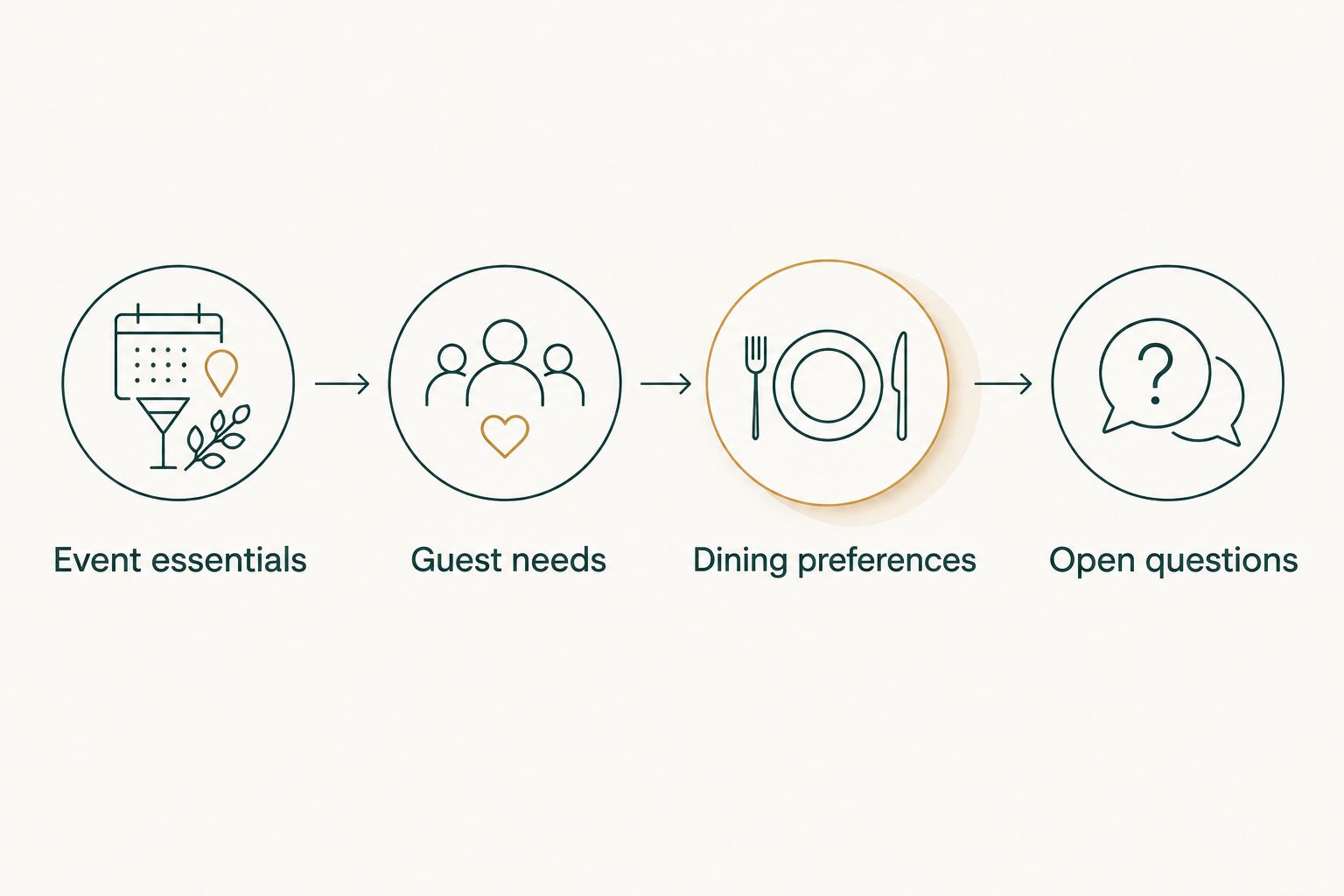
Use these plain labels in your own planning note:
- Event essentials: occasion, date, time and guest count.
- Guest needs: dietary requirements, allergies and accessibility questions.
- Dining preferences: the kind of evening you hope to arrange.
- Open questions: anything the restaurant needs to explain or confirm.
These are planning labels, not representations of website fields. Enter the information wherever the current inquiry route asks for it, and use any message space for the remaining essentials.
For dietary needs, state the requirement accurately and ask what can be accommodated. Do not promise a guest a particular dish, preparation method or accommodation before receiving a direct answer.
Expected result: Your brief makes the essential questions easy to find without turning your first message into a long event proposal.
THE WEBSITE INQUIRY ROUTE
Open the current event information
- Open Siena’s website and look for its current private-dining, event or contact information.
- Read the instructions on that page before entering your details. Use the labels actually displayed rather than searching for a button name from an older guide.
- Follow the event-specific route if the website provides one. If it directs you to another contact method, follow that instruction instead of assuming an online form is required.
- If you reach a standard table-reservation flow, check whether it addresses your event needs. Do not treat a table request as confirmation of a private arrangement.
Expected result: You have identified the restaurant’s current published route for discussing your gathering, rather than an unrelated booking page.
A date-night table and a celebration inquiry can involve different questions. For a dinner that needs no special arrangement, follow the website’s reservation link; for a gathering that needs discussion, make those requirements clear through the current contact route.
Enter and review your request
- Supply the information requested by the current form or contact instructions. Match dates, names and contact details to your prepared brief.
- Add your occasion and any essential questions that the required fields do not cover. Keep the most consequential requirement near the beginning.
- Review the entire request before submitting. Check the date, year, guest estimate and email address, especially if someone else supplied those details.
- Complete the submission using the control or contact method displayed. Read any resulting message rather than assuming that leaving the page means the request went through.
Expected result: Your request has been sent through the published route, with clear details and a record of whatever acknowledgment the website or contact method provides.
Keep a useful record
Save a copy of your message and any acknowledgment you receive. If a reference number or email thread is provided, retain it with your event note.
For your 2026 planning record, keep the requested date separate from the date you submitted the inquiry. They answer different questions when you need to follow up.
Do not interpret an acknowledgment as acceptance of every detail in your message. Read it for what it actually confirms: receipt, a request for more information or an agreed arrangement.
Expected result: You can follow up accurately without reconstructing the original request from memory.
YOUR FIRST MESSAGE
Keep your message warm and direct. Give the restaurant the facts needed to understand the gathering, then ask the questions that determine your next decision.
Build the message in this order:
- Introduce yourself and name the celebration.
- Give your preferred date, dining time and guest estimate.
- Explain whether you are asking about a private setting or a group dinner.
- State essential guest needs and any flexibility in the plan.
- Ask what information and confirmation are needed next.
You do not need elaborate language to describe a meaningful evening. “Anniversary dinner” tells the restaurant more than a paragraph about wanting something unforgettable.
Describe your priorities; ask about the arrangements. If conversation and time together matter most, say that. If the gathering includes a surprise or a planned toast, ask whether and how that can be accommodated rather than presenting it as settled.
Keep optional ideas out of the opening sentence. The restaurant should not have to search through decoration requests to find your date and guest count.
Start Your Event Inquiry
Open the current website, review the event information and follow the published inquiry instructions.
WHEN YOUR EVENT DETAILS CHANGE
A second workflow begins when the date, attendance or requirements change. Update the existing conversation rather than creating a separate version of the event without context.
| Workflow | Best for | Strength | Limitation |
|---|---|---|---|
| Initial inquiry | Introducing a new celebration | Collects the essential details in one request | Does not establish a confirmed arrangement |
| Update to an existing inquiry | Revising an event already under discussion | Keeps changes connected to the original request | Requires the restaurant to acknowledge consequential changes |
Update the existing conversation
- Find the original correspondence or acknowledgment. Reply in that thread when the contact method permits it.
- Identify the event by the organizer’s name and requested date. Include an existing reference only if one was supplied.
- State what changed and what remains the same. Make a new guest estimate or preferred date easy to distinguish from the previous version.
- Ask the restaurant to confirm how the change affects the proposed arrangement.
Expected result: The conversation contains a clear revision, not competing versions of your celebration plans.
For a 2026 event that moves to another date, write the complete replacement date. Avoid relative wording such as next Friday, which loses meaning when a message is read later.
TROUBLESHOOTING
You cannot find an event inquiry form
Return to the current website navigation and look for published event or contact instructions. A form is not the only possible inquiry route; use the method the restaurant actually provides.
Do not guess an email address or construct a private-dining web address. If the website only directs you toward reservations, check the information there before assuming it handles your requested arrangement.
You submitted but cannot tell whether it worked
Check the page for a completion message and review your email, including spam folders. Save any acknowledgment you find.
If the status remains unclear, ask through a published contact route whether the request was received. Identify the original request instead of repeatedly submitting the same details.
Your group size is still changing
Give your current estimate and explain that attendance is not final. Ask when the restaurant needs an updated count rather than assuming a deadline.
When the count changes, send the revised total in the existing conversation. Do not assume the original discussion automatically covers the new group size.
A guest has an essential requirement
Describe the requirement directly and ask for an explicit response. For allergies or accessibility needs, avoid broad descriptions that leave the restaurant guessing about what the guest needs.
Keep the answer with your event record. If the requirement cannot be confirmed, resolve that question before presenting the arrangement to the guest as suitable.
CUSTOMIZE YOUR CELEBRATION
Once the essentials are clear, shape the conversation around the occasion. An anniversary dinner calls for a different explanation than a family gathering, even when both begin with the same date-and-guest-count brief.
For a Downtown Alpharetta celebration in 2026, keep your focus on what guests need to enjoy the evening together. Ask about the dining arrangements first, then discuss any additional requests through the same conversation.
Keep requests and confirmed details separate. That distinction lets you plan with confidence without turning an unanswered question into a promise.
FAQ
How do I submit a Siena private event inquiry in Alpharetta?
Start on Siena’s current website and follow its published event or contact instructions. Prepare your date, guest estimate, occasion and contact details before sending the request.
What should I include in a private dining inquiry?
Include your occasion, preferred date and dining time, estimated guest count and contact details. Explain whether a private setting is essential and identify guest requirements that need a direct answer.
Does submitting an event inquiry confirm my booking?
No. Treat the inquiry as a request for discussion and obtain explicit confirmation of the arrangement before treating the event as booked.
Should I make a table reservation or send an event inquiry?
Use the website’s reservation route for a table request and its published event or contact route for arrangements that need discussion. A table reservation does not by itself confirm a private setting.
Can I inquire before I know the final guest count?
State your current estimate and explain that attendance is not final. Ask when an updated count is needed, then send changes through the existing conversation.
How do I change the date after submitting an inquiry?
Update the original conversation with the complete replacement date and identify any other changed details. Ask the restaurant to acknowledge the revision before treating it as agreed.
How should I include dietary or accessibility needs?
State each essential requirement clearly and ask what can be accommodated. Do not promise a specific accommodation to a guest before receiving a direct answer.
ONE LAST THING
Before you send invitations, read your correspondence as though you were a guest. Can you tell which date and dining arrangement are confirmed, and which details are still requests?
Keep a short confirmed-details note separate from your wish list. A warm celebration starts with clear expectations, leaving the occasion—not the administration—at the center of the evening.