Best overall: Chianti Classico. Best for celebrations: Prosecco. Best for seafood: Vermentino. Best for a slow, serious dinner: Barolo. These are the eight Italian and Mediterranean wine styles to look for when you sit down for dinner at Siena in Downtown Alpharetta in 2026.
- Chianti Classico is the safest pick for most Siena dinners in 2026.
- Order Prosecco for toasts, Vermentino for seafood, Barolo for a long dinner.
- Pick the wine by the dish, not the grape name.
- Ask your server which bottles are pouring; wine lists change.
- Best wines Siena wine bar Alpharetta: match style to course and you rarely miss.
Why this matters
A Mediterranean and Italian menu rewards the right glass. Acid, tannin and bubbles each do a different job against olive oil, tomato, cheese and char.
This guide ranks styles, not specific bottles. Wine lists move with the season and the kitchen, so confirm what is pouring when you arrive. Every style below is a classic of Italian and Mediterranean wine, which is why each one sits naturally beside Italian and Mediterranean cooking.
The best wine at Siena in 2026 starts with one question: what are you eating?
What makes the best wine for a Siena dinner
Use five criteria to audit the ranking before you read it.
- Acidity. Tomato sauces and citrus dressings flatten low-acid wines. Higher acidity keeps both the plate and the glass lively.
- Tannin. Grippy reds want fat and protein. Without them they taste harsh.
- Weight. Match the wine to the plate. Light fish wants a light wine; braised meat wants a heavy one.
- Occasion. A toast, a first date and an anniversary ask for different bottles.
- Flexibility. A wine that works across three or four courses beats a showpiece that suits one.
The eight wine styles at a glance
| Rank | Style | Best for | Standout trait | Key limitation |
|---|---|---|---|---|
| 1 | Chianti Classico | Red-sauce pasta, roasted meats | Bright cherry, high acidity | Can read tart without food |
| 2 | Prosecco | Toasts, starters, happy hour | Light, fresh bubbles | Not built for heavy mains |
| 3 | Vermentino | Seafood, citrus, herbs | Crisp, saline, mineral | Too light for cream sauces |
| 4 | Barolo | Slow dinners, milestones | Nebbiolo structure and depth | Needs food and patience |
| 5 | Pinot Grigio | Light starters, shared plates | Clean and easy | Can taste neutral |
| 6 | Montepulciano d'Abruzzo | Hearty pasta, grilled lamb | Soft tannin, dark fruit | Fuller than some want |
| 7 | Dry Italian rosé | Brunch, warm evenings | Dry, fresh, food-friendly | Seasonal appeal |
| 8 | Aperitivo pairing | Before dinner | Bitter-sweet appetite opener | An acquired taste |
1. Chianti Classico: best all-round red for pasta and roasted meats
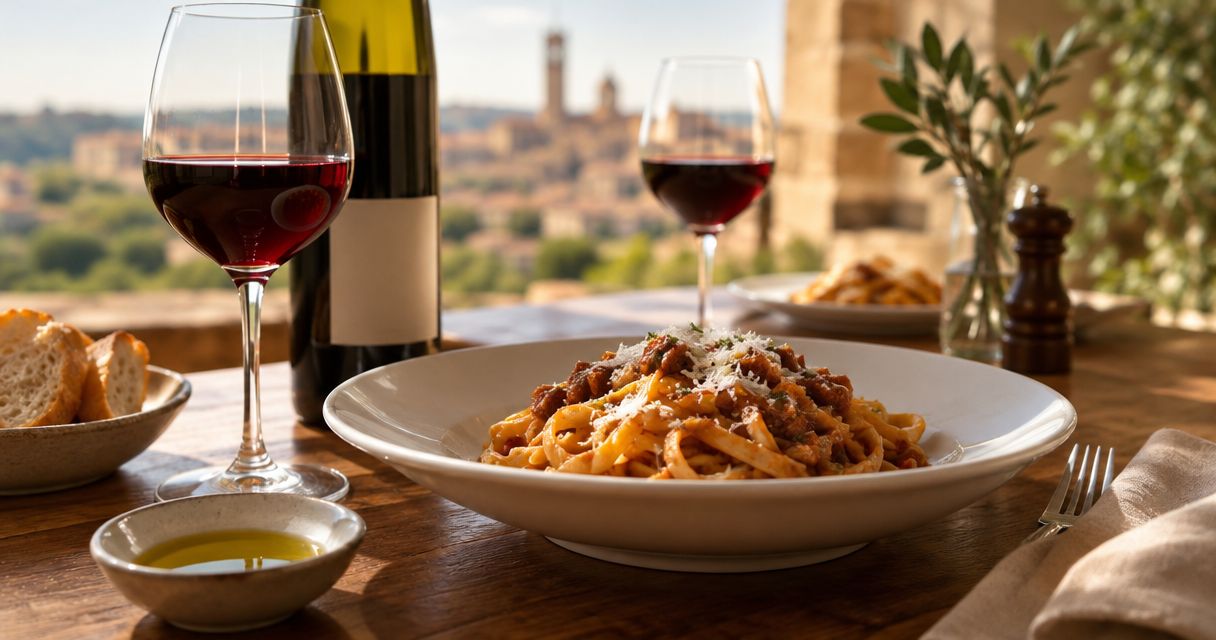
Chianti Classico is built on Sangiovese. Regional rules require at least 80% Sangiovese in the blend. That gives you red cherry, a savory edge and acidity that cuts straight through tomato and olive oil.
Chianti Classico pros:
- Works across pasta, roasted meat and shared starters
- Acidity refreshes the palate between bites
- Rarely overwhelms a mixed table
Chianti Classico cons:
- Tart on its own, without food
- Style varies by producer, so ask what is pouring
Best for: a table where everyone orders something different.
Verdict: Buy.
2. Prosecco: best for toasts and the first round
Prosecco comes from northeast Italy and is usually made by the tank method, which keeps it fresh and fruity rather than toasty. It is the natural opener for a birthday, an engagement or any table that wants to raise a glass.
Prosecco pros:
- Light enough to start a long dinner
- Pairs with salty starters and cured bites
- Easy to agree on across a group
Prosecco cons:
- Fades against rich, heavy mains
- Sweetness varies, so look for brut if you want it dry
Best for: celebrations. If you are marking something at Siena, start here, then move to a still wine with the main course.
Verdict: Buy.
3. Vermentino: best for seafood and citrus
Vermentino grows along the Mediterranean coast, from Sardinia to Liguria and Tuscany. It is crisp, a little saline and herbal. It suits grilled fish, shellfish and anything finished with lemon.
Vermentino pros:
- Mineral snap lifts seafood without covering it
- Handles herbs and citrus dressings
- More character than a neutral white
Vermentino cons:
- Thin against cream or butter sauces
- Best served well chilled
Best for: seafood dishes and warm-weather dinners. Check the current dinner menu for fish options.
Verdict: Buy.
4. Barolo: best for a slow, serious dinner
Barolo is 100% Nebbiolo from Piedmont. Its rules require at least 38 months of aging before release, including at least 18 months in wood. The result is tannic, floral and deep, with a long finish.
Barolo pros:
- Gives a milestone dinner a sense of occasion
- Pairs with braised meat, mushrooms and aged cheese
- Rewards a slow pace
Barolo cons:
- Tannin turns stiff next to lighter dishes
- Not a casual glass; it wants a full meal
Best for: an anniversary or a quiet, unhurried table for two.
Verdict: Hold for the right night. Buy when your main is built for it.
5. Pinot Grigio: best for light starters and shared plates
Italian Pinot Grigio is clean, dry and quiet. It does not compete with a plate of antipasti, which is its whole point.
Pinot Grigio pros:
- Easy for guests who do not love bold wines
- Pairs with light salads and soft cheeses
- Pleasant at happy hour
Pinot Grigio cons:
- Can taste neutral
- Gets lost next to bold, rich flavors
Best for: a relaxed start and mixed-preference groups.
Verdict: Hold. Pleasant, rarely memorable.
6. Montepulciano d'Abruzzo: best for hearty pasta and grilled lamb
Made from the Montepulciano grape in Abruzzo, this red is soft in tannin and dark in fruit. It is gentler than Barolo and fuller than Chianti Classico.
Montepulciano d'Abruzzo pros:
- Smooth enough for people who avoid tannic reds
- Stands up to grilled and braised dishes
- Bridges light and big reds
Montepulciano d'Abruzzo cons:
- Less acidity than Sangiovese
- Can feel heavy with a light first course
Best for: cooler evenings and richer mains.
Verdict: Buy.
7. Dry Italian rosé: best for brunch and warm evenings
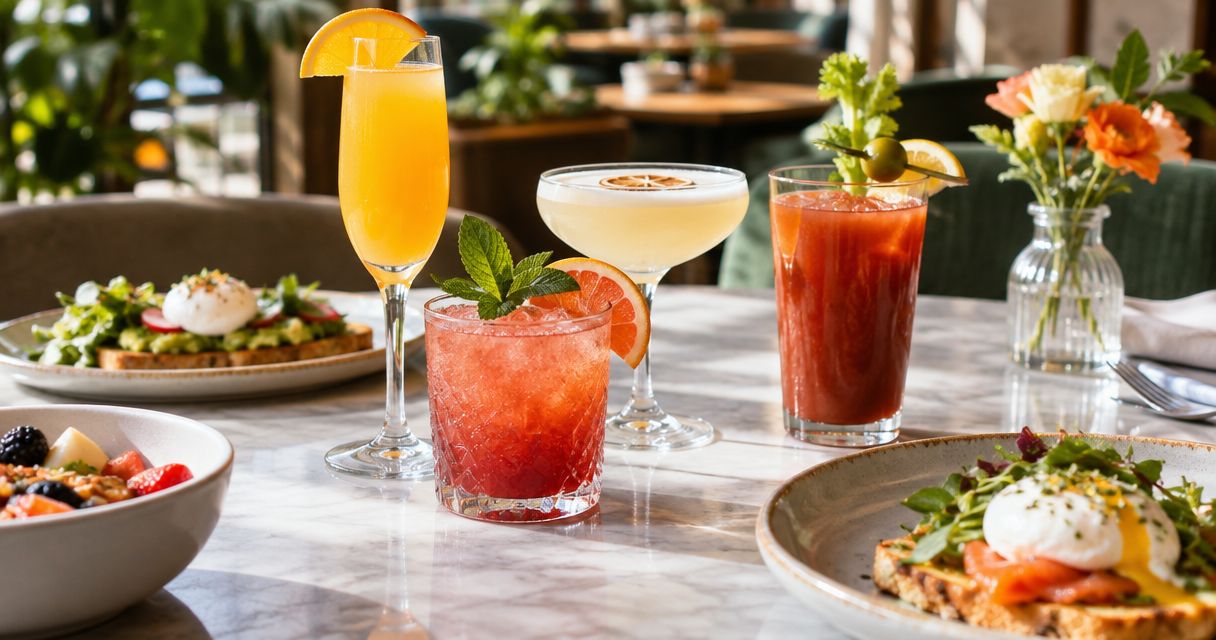
A dry Italian rosé sits between white and red. It is bright and lightly fruity, and it is easy with eggs, salads, cured meats and shared plates. That makes it a natural companion to brunch.
Dry Italian rosé pros:
- Works across brunch and dinner
- Refreshing without being sweet
- Flexible with Mediterranean flavors
Dry Italian rosé cons:
- Seasonal appeal for some guests
- Ranges from pale and delicate to fuller and fruitier
Best for: brunch and early evening.
Verdict: Buy for brunch, Hold for a heavy dinner.
8. Aperitivo pairing: best for opening the evening
Italian dining often starts with something bitter, bright or bubbly before the food arrives. A glass of sparkling wine or a bitter-sweet aperitivo-style drink wakes the appetite. Siena serves cocktails and runs a happy hour, so this is an easy bridge between the bar and the table.
Aperitivo pairing pros:
- Sets the pace for a slow dinner
- Pairs with salty bites
- Gives you a drink to hold while you choose
Aperitivo pairing cons:
- Bitterness is polarizing
- Not a pairing for the main course
Best for: early arrivals. Check what time happy hour starts before you plan.
Verdict: Hold unless you already like bitter flavors.
Wine by occasion at Siena in 2026
The same list reads differently depending on why you are there. Use the occasion as a shortcut when the menu feels long.
- Date night. Open with Prosecco, then share a bottle of Chianti Classico. Light enough to talk over, serious enough to feel like an evening.
- Anniversary. Toast with Prosecco and give the main course to Barolo. It slows the table down, which is the point.
- Birthday or engagement. Bubbles first, every time. Move to Montepulciano d'Abruzzo if the group wants an easygoing red.
- Brunch. Dry Italian rosé or Prosecco. Both stay fresh next to eggs and salads.
- Seafood night. Vermentino from start to finish.
The pattern is simple. Light and bright at the start of the evening, structure and depth with the main course.
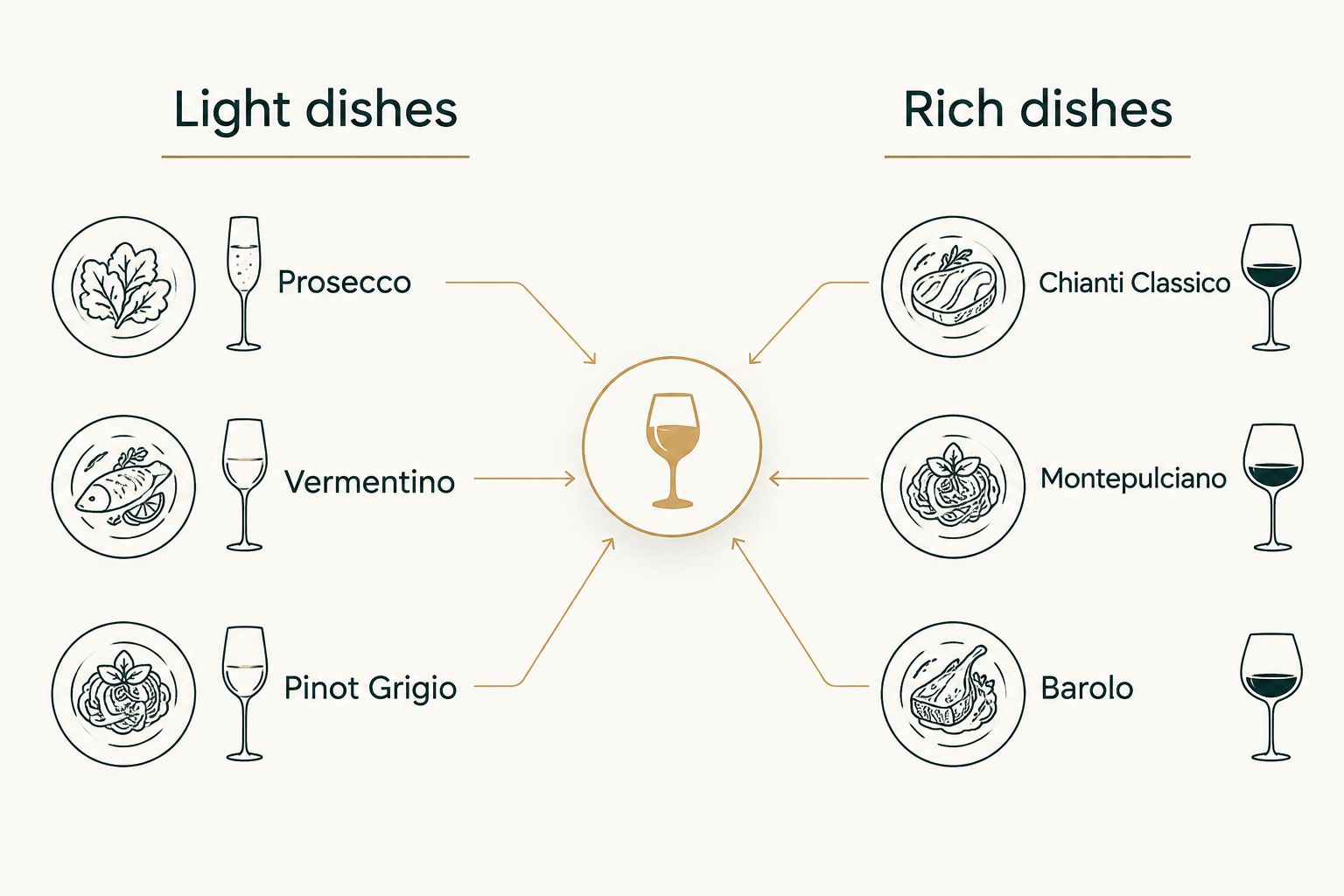
How these were ranked
The ranking weighs the five criteria above. Flexibility across courses counts most, which is why Chianti Classico leads and Barolo sits fourth despite its prestige. Each style owns a distinct use-case slot, so the list works as a decision tree: toast, seafood, red-sauce pasta, milestone dinner, brunch.
Siena's own wine list is the final word. Wines change, and no guide replaces what your server tells you about tonight's bottles.
How to order wine at Siena in 2026
- Pick your main first. Then choose the wine. Do it in that order.
- Ask about pairings. Your server can point you toward a glass for your dish; see whether Siena offers wine pairings with dinner.
- Share a bottle for two or more. When the table wants the same style, a bottle carries across courses.
- Go by the glass for mixed orders. Seafood on one side and braised meat on the other call for two different wines.
- Reserve ahead for weekend dinners. Date nights and celebrations fill the room first.
Plan your evening at Siena
Dinner, brunch, happy hour and cocktails in Downtown Alpharetta.
Which wine should you choose?
Still undecided? Order Chianti Classico for dinner and Prosecco to start. That pair covers almost every table at Siena in 2026. Swap in Vermentino if you are eating fish, and save Barolo for the night you want to linger.
FAQ
What are the best wines to try at Siena in Alpharetta?
Start with Chianti Classico for dinner, Prosecco for a toast and Vermentino for seafood. Confirm the current list with your server, since bottles change.
What wine goes with Italian pasta?
Chianti Classico is the safest choice. Its acidity cuts through tomato sauce and olive oil. For richer sauces, try Montepulciano d'Abruzzo.
What wine pairs with seafood?
Vermentino. It is crisp and saline, and it lifts grilled fish and shellfish without covering them.
What is the best wine for an anniversary dinner?
Barolo suits a slow, special dinner. Start with Prosecco for the toast, then move to a structured red with your main.
Is Chianti Classico dry?
Yes. It is a dry red made mostly from Sangiovese, with high acidity and red cherry fruit.
Should I order wine by the glass or the bottle?
Order a bottle when two or more people want the same style. Order by the glass when your table is eating very different dishes.
What wine works for brunch?
A dry Italian rosé or Prosecco. Both stay fresh next to eggs, salads and cured meats.
One last thing
The most useful move is simple: decide the dish, then ask your server for the bottle. Italian wine is made to sit beside food, and a glass chosen after the main almost always beats one chosen before.