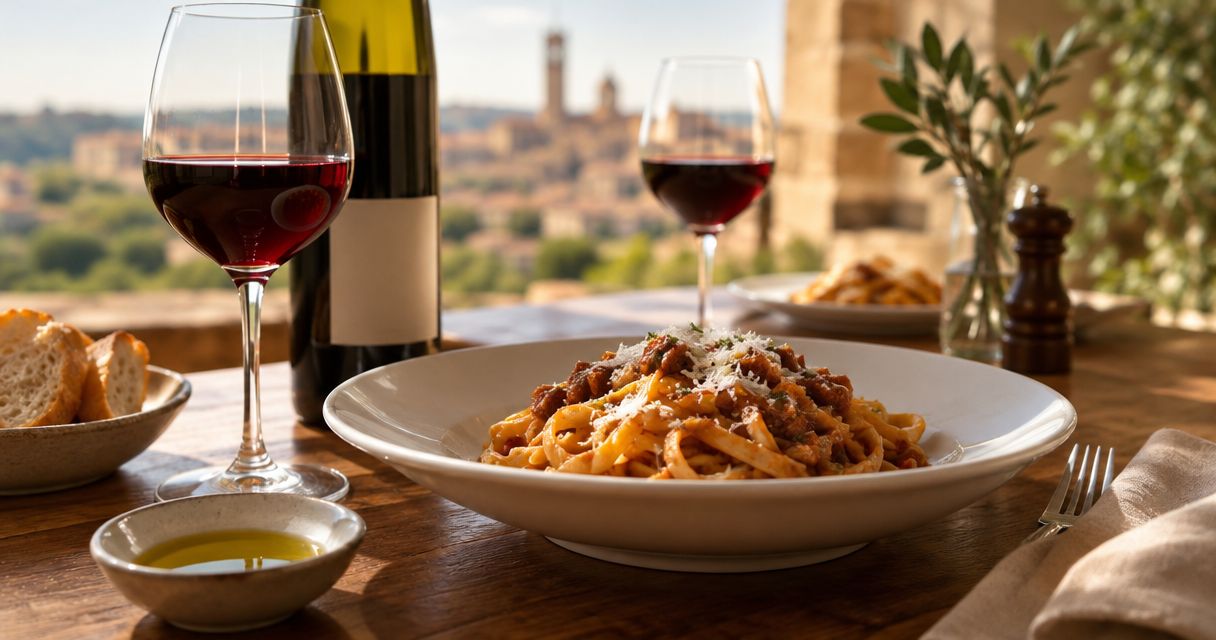
Best overall: Sangiovese. Best for seafood and pesto pasta: Vermentino. Best for cream and butter sauces: Chardonnay. Match the wine to the sauce, not the noodle, and the pairing works at any table at Siena, the Mediterranean and Italian restaurant in Downtown Alpharetta.
This guide covers the best wine pairings for pasta at Siena in 2026, organized by sauce style. Browse the pasta dishes worth ordering at Siena, then use the wine styles below to build the pairing.
- Sangiovese is the best all-round red for tomato-based pasta at Siena in 2026.
- Vermentino pairs best with seafood and pesto pasta; Chardonnay suits cream and butter sauces.
- Pinot Noir fits mushroom and truffle pasta; a structured red like Nebbiolo fits slow-cooked meat ragù.
- Pick the wine by the sauce, then confirm the current list with your server.
Why this matters
Pasta is a vehicle. The sauce decides what the wine has to do: cut through fat, match acidity, or stand up to rich meat. Pair the wrong style and either the dish or the glass disappears.
A good pairing turns a date-night dinner into the meal you remember. The rules below hold for every Italian pasta, so they work whatever the kitchen is cooking the night you book.
The styles here come from established Italian pairing tradition, not from Siena's current list. Menus and wine selections change, so check what is poured on the night you visit.
What makes the best pasta wine
Five criteria decide every ranking on this page:
- Acidity. Tomato sauces are acidic. The wine needs equal or higher acidity, or it tastes flat.
- Body. Light sauces want light wines. Rich ragù wants structure and tannin.
- Fat handling. Cream, butter and cheese need acidity or texture to cut through.
- Flavor weight. Delicate seafood vanishes next to a heavy red.
- Regional logic. Italian wines grew up beside Italian food. When in doubt, choose the wine from the same region as the dish.
Pasta wine pairings at a glance
| Wine style | Best for | Pairs with | Key limitation |
|---|---|---|---|
| Sangiovese (Chianti) | Best overall | Tomato-based pasta | Can taste thin with very creamy sauces |
| Vermentino | Seafood and pesto | Clam, shrimp, basil sauces | Too light for meat ragù |
| Chardonnay | Cream and butter sauces | Alfredo-style, carbonara-style dishes | Heavily oaked versions overpower delicate pasta |
| Nebbiolo or Montepulciano | Meat ragù | Slow-cooked beef, pork, lamb | Too big for light dishes |
| Pinot Noir | Mushroom and truffle | Earthy, savory sauces | Poor match for spicy tomato |
1. Sangiovese: best red for tomato-based pasta
Sangiovese is the backbone of Chianti and the most dependable red in Italian dining. It carries bright acidity and cherry fruit that mirror a tomato sauce instead of fighting it.
Sangiovese pros:
- Acidity matches tomato sauce, so neither tastes sharp
- Medium body works with everything from marinara to baked pasta
- Herbal notes echo basil and oregano
- Food-friendly enough for a table with mixed orders
Sangiovese cons:
- Tannin can feel dry against rich cream sauce
- Overpowers delicate seafood pasta
Best for: a shared table where several people order red-sauce dishes.
Verdict: Buy. This is the default order when you are unsure.
2. Vermentino: best white for seafood and pesto pasta
Vermentino is a crisp Mediterranean white with citrus and a faint saline edge. It does what a squeeze of lemon does for seafood: lifts and refreshes.
Vermentino pros:
- Citrus and mineral notes flatter shrimp, clams and white fish
- Herbal character matches basil pesto
- Light enough not to bury delicate flavors
- Refreshing on a warm Georgia evening
Vermentino cons:
- Thin against a meat-heavy sauce
- Loses its edge if served too warm
Best for: seafood pasta and anything built on olive oil, garlic and herbs.
Verdict: Buy. Serve whites cold, around 45 to 50°F, which is the standard guidance for crisp styles. For more on what the kitchen does with the sea, see the seafood dishes to order at Siena.
3. Chardonnay: best for cream and butter sauces
Cream sauces coat the palate. Chardonnay has the texture and the acidity to match that richness and cut it.
Chardonnay pros:
- Round body matches the weight of cream and cheese
- Subtle oak adds a buttery note that echoes the sauce
- Acidity resets the palate between bites
- Also suits chicken and mushroom-cream pastas
Chardonnay cons:
- Heavily oaked bottles overpower the dish
- Not the right call for tomato or spicy sauces
Best for: the creamiest, richest pasta on the table.
Verdict: Buy, and ask for a lightly oaked or unoaked style.
4. Nebbiolo or Montepulciano: best for meat ragù
Slow-cooked meat sauce is the heaviest pasta category. It needs a wine with structure, and tannin is the tool: it binds with the protein and fat and makes both taste cleaner.
Nebbiolo and Montepulciano pros:
- Firm tannin stands up to long-braised meat
- Dark fruit and earthy depth match the sauce's intensity
- Montepulciano is the softer, easier-drinking choice
- Nebbiolo rewards a slow, celebratory dinner
Nebbiolo and Montepulciano cons:
- Overwhelms light or seafood pasta
- Better with a full plate than as a sipping wine
Best for: hearty, savory pasta on a cooler evening.
Verdict: Buy for ragù. Skip it for anything light. Serve reds slightly below room temperature, around 60 to 65°F.
5. Pinot Noir: best for mushroom and truffle pasta
Pinot Noir is light in tannin and heavy on earth. That forest-floor character is why it is the classic partner for mushroom and truffle.
Pinot Noir pros:
- Earthy notes mirror mushroom and truffle
- Low tannin keeps it gentle with cream-based mushroom dishes
- Red fruit brightens richer plates
- A good compromise when the table splits between red and white
Pinot Noir cons:
- Gets lost beside bold, spicy tomato sauces
- Quality varies widely by producer
Best for: savory, earthy, autumnal pasta.
Verdict: Buy. It is the most flexible red when the table cannot agree.
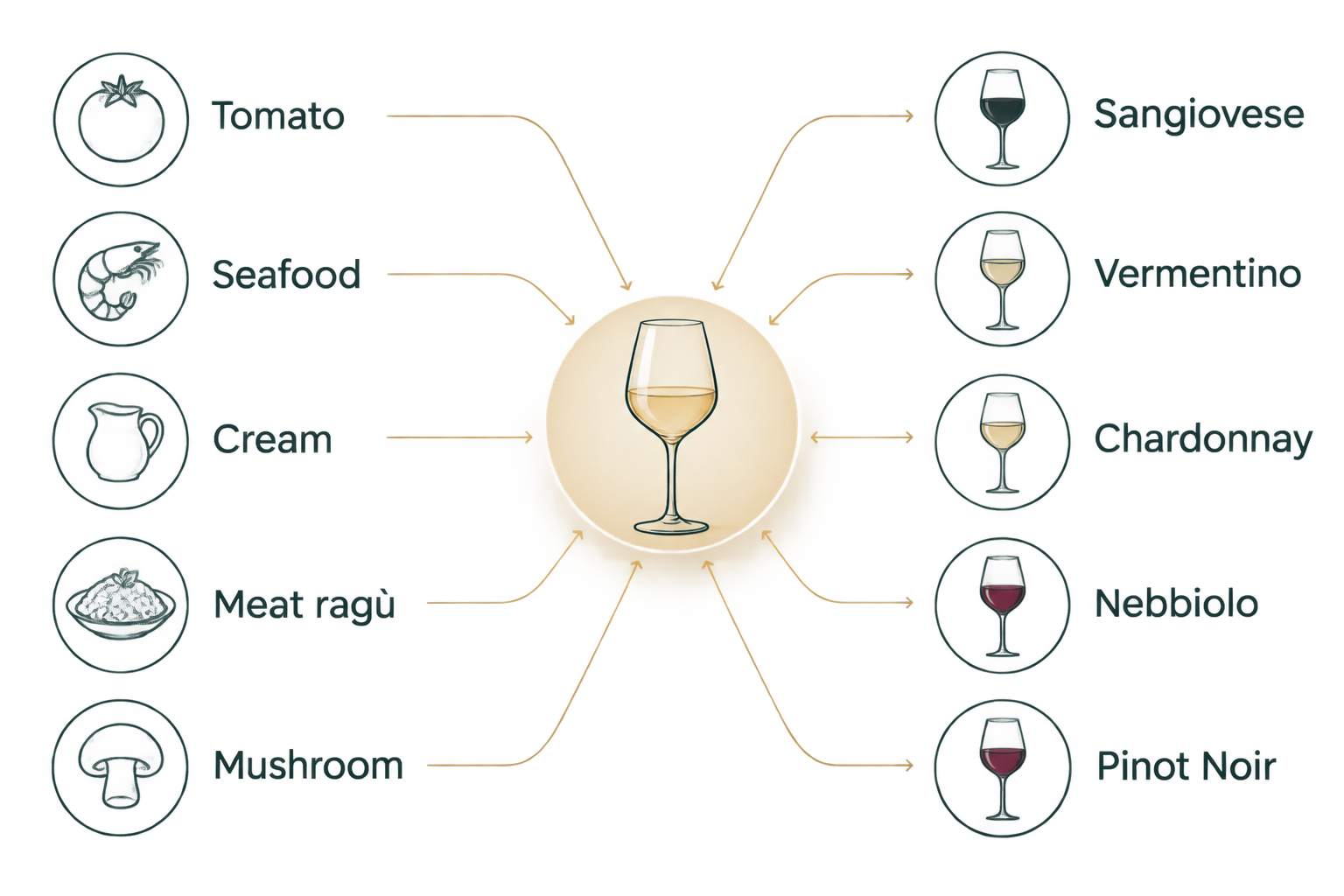
How these pairings were ranked
Each style was ranked against the five criteria above: acidity, body, fat handling, flavor weight and regional logic. Sangiovese leads because it covers the widest range of tomato-based dishes. The rest hold a distinct slot, so the list works as a decision tree rather than a leaderboard.
How to order wine with pasta at Siena
Three moves make the pairing easy:
- Pick the pasta first. The sauce decides the wine.
- Name the style. Tell your server you want a Sangiovese, a Vermentino or a Pinot Noir and ask what is currently poured.
- Ask for a recommendation. The team knows the list better than any guide. For how pairings work at the table, read whether Siena offers wine pairings with dinner.
Prefer to start at the bar? The wines to try at Siena's wine bar covers that side of the evening.
Reserve your Siena table
Date-night dinner in Downtown Alpharetta, built around the pasta and the pour.
Which wine should you choose?
The undecided reader should order Sangiovese. It handles tomato, baked and most mixed-table situations, which makes it the safest pick at Siena in 2026.
Go Vermentino for seafood and pesto, Chardonnay for cream, Nebbiolo or Montepulciano for ragù, and Pinot Noir for mushroom and truffle. If two people at the table order very different pasta, a bottle of Pinot Noir or a glass of each style keeps both dishes happy.
Siena is a Mediterranean and Italian restaurant in Alpharetta built for exactly this kind of evening: chef-driven dishes, a considered glass, and time to enjoy both.
FAQ
What is the best wine for pasta at Siena?
Sangiovese is the best all-round pairing in 2026 because its acidity matches tomato-based sauces. Choose Vermentino for seafood, Chardonnay for cream sauces and Pinot Noir for mushroom dishes.
Should I order red or white wine with pasta?
Choose by sauce, not by pasta shape. Tomato and meat sauces take red; seafood, pesto and cream sauces usually take white.
What wine goes with creamy pasta?
A lightly oaked or unoaked Chardonnay. Its body matches the richness and its acidity cuts through the cream.
What wine pairs with seafood pasta?
Vermentino. Its citrus and mineral notes work like a squeeze of lemon on shrimp, clams and white fish.
Does Siena offer wine pairings with dinner?
Ask your server when you sit down. The current wine list and any pairing suggestions are best confirmed with the team on the night.
What wine goes with meat ragù?
A structured red such as Nebbiolo or Montepulciano. Firm tannin cuts through slow-cooked meat and fat.
At what temperature should pasta wines be served?
Serve crisp whites around 45 to 50°F and reds around 60 to 65°F, slightly below room temperature.
One last thing
If the table is split, order one bottle of Pinot Noir or ask for a glass of Sangiovese alongside a Vermentino. Two styles cover almost every pasta on the table, and the second glass is the one people remember.